Two Poems by Lee Landau

Lover Gone Away
Another love disappears, ghosts
echo loss, even derision.

The record holder for shortest affairs
I entreat these misalliances, small

Wonders of dreamscape over reality,
bones with no underpinnings to salvage.

Love or friendship slip away, the knot
always too tight or too loose to hold

Him to seasons, and this hearth where
love bolds and binds passion.

How to hold him close again
his feelings less than passionate?

I know this cooling off rattles
our soured relationship.

His departure, maybe preordained,
hugs the winter season, not me.

Snow shies away from ground, flakes
large but porous too damp to stick.

They disappear like him tumbled dry
of emotion, melted where once my tongue

Left flakes, each unique, my gift. Now
this scene thrives on empty –

Singes of farewell strike my tongue.


More Clouds 

White clouds, a pop-up box
of tissues, stain blue horizons—
white to pewter, stormy black.

Sly clouds translate
into hail, tornados, thunder.
Weathermen predict these odds.

nbsp;
They interpret content of clouds
like a novel, uncover piles
of once white towels now soiled,

ivory, crème, smudged
suspicions, just cloudy choices
to end this report.

Thanks to Wordsworth–
we weather clouds,
lonely, cumulus, ever
wandering.


About the Poet
Lee Landau writes with raw honesty and tenderness about interactions in a unique, personal landscape: her relationships with family, their dysfunctional backstories, and the many phases of grief that tumble through her poems and life. She addresses an internal audience of the departed, the dead and dying, and highlights unexpected losses.
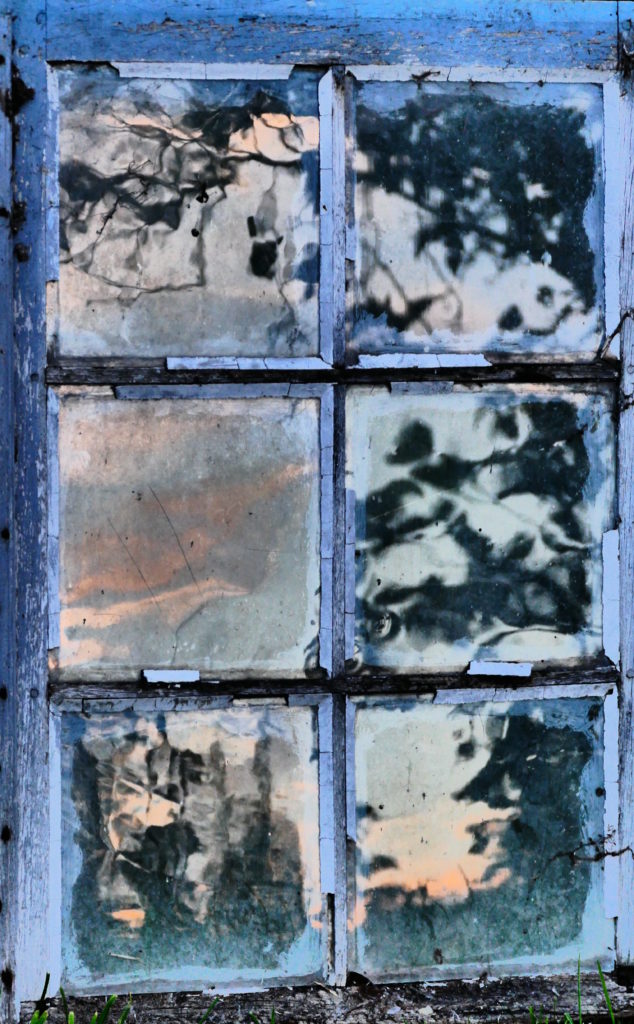
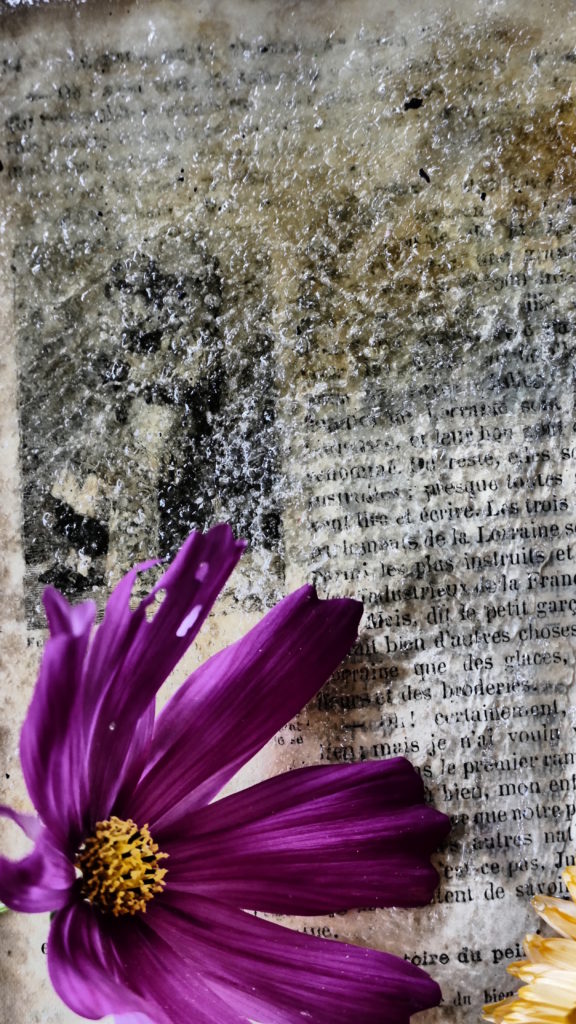
Two Photos by Fabrice B. Poussin

If Only


In the Air of Beauty


About the Artist

Fabrice Poussin teaches French and English at Shorter University. He is an author of novels and poetry and his work has appeared in Kestrel, Symposium, The Chimes, and dozens of other magazines. His photography has been published in The Front Porch Review, the San Pedro River Review and more than 170 other publications.

Two Poems by John-Ivan Palmer

(Matrimony)

Massage Parlor Honeymoon
He was last seen heading toward
that chancel near the pipeline
in Dawson Creek.
Under a moonful of rumor
And a spoonful of dream
The guests arrived,
the trucker, the welder
the clone band drummer
and a guy covered in grease.
The doors were opened wide,
the guests were met
and all were expected to feast
with intentions black as crows
on a highway of flattened fur.
House rules, honey.
Here’s all the things we’re not going to do.
No kissing the bride,
nothing in the hair,
the lights stay on.
Can’t trust the likes of.
Now fork it over, you.
A necktie licked one wrist,
His belt welded the other
To a bed of unanswered questions.
Her tattoo was a sneer of boredom
On the biggest misunderstanding
That ever straddled a Sunday.
Thoughts to yourself, whatever
Your name is.
Ask nothing of stalled migration
Through unspoken want
And the torn fabric weaved
Of what was reached so deep for
In this glittering nave,
where secrets blow
like dust in the breath of forgetting.

(Sin)
Face Focus Burnhole

Here now in this brush
On this wet sheet

Full Moon stokes the rage
Of a whiskered queen,
A ship of fire
Plunges over the edge
Of a flat earth as
Full Moon sails through the tip
Of a ballpoint writing
To the news
Then cuts through the mail
To become the news
As reason and logic
Fall from the sky
In shattered parts.

Full Moon leans in the old arcade
Of the ticket taker’s wish

Lives in codes
Stamped on spoons
Magnetic strips, encrypted slips
And numbers carved in stone

Reckon your metered soul, Full Moon,
And book yourself in business class
Then fly through a careful choice of words

To that foreign land.
Press your gaudy finger
On the down button of chance
And descend to a level
Where you need a special card
To get off
Then kiss, breathe,
thrive, Full Moon
In everything you spawn
In everything you spill.


(Redemption)


About the Poet

John-Ivan Palmer’s literary work has appeared in Exquisite Corpse, Nth Position, Wild River Review, Wisconsin Review, New Oregon Review, and Other Voices. The Drill Press published his novel, Motels of Burning Madness, in 2009 and he has received the Pushcart Prize for fiction.

Two Poems by Eric Fisher Stone

Laika the Space Dog

Alone, she entered an abyss
bejeweled with blue giant suns,
white dwarfs, black holes, quasars
and nebulae like clouds of gnats
in the deep, the clockwork spin
of galactic arms across all dreams
as Laika, the Soviet space dog
was launched into heaven
for the Motherland and reached
the tonnage of night without food
or water and died, memories stirring
of chasing fireflies through sweet grass,
her hot breath lost beyond worlds,
Earth’s scent wisped to her brain
until her last thoughts began:

Look, there’s a darkness
and the blue globe is dimming.
I wish I could take the Earth in my mouth
and run with it across the stars
where my grave is laid in a bed of stars.

Here without hares or foxes
life is bigger and blacker
than I thought it could be, my paws
like wings floating in this gray car
where I’ll die lonelier than snakes
and drown in night’s deep river,
crossing the boundaries of touch
without stone or soil to walk on.

People sent me to the forever
where no flowers open smells,
only glittering specks blossom
and sleeping I dream of dogs
running over glaciers, chewing antelope,
chasing shaggy brown beasts, their tusks
like sharpened moons—I carry
my kind’s history to the end of ends.

Howling towards shadows’ outer layers
my ghost is fleeing to the world.

Dying I will come back, Yes, I’ll taste
tender air and amber sunlight
back from immensity. I’ll climb
the rainbow’s stairs earthward
back to green shoots and streets
cobbled with hardness, back from the timeless
seabed of space to the churning ground. Back.


Poem for Bobby Fischer: 1943-2008

Nothing soothes pain like human touch—Fischer’s reported last words

The universe scrolled on, stars like spurs
in heaven and northbound geese swept
over Reykjavik where he played
C4 for the first move of game six
and where he died bearded and schizoid
as King Lear, an anti-Semite loved
by his Jewish mother. At fourteen
he was the American chess champion,
a high school dropout, and afraid
the government read his thoughts
through tooth fillings. Yet

he stood like a kraken risen
above white whales drumming in the deep,
a god rounding islands with his will
while galaxies burn and wheel
their dreaming work on his grave raging
Icelandic poppies from the earth,
the sun’s wellspring soaking glaciers,
his rooks, knights, kings and bishops dance

in memory, before we, like all
who lived, wither heroically
vulnerable in our last nights
while our tears rust into frost
and the ocean rolls over its deep bed of stones.

About the Poet

Eric Fisher Stone lives in Fort Worth, Texas where heI graduated from Texas Christian University and work at a PetSmart. He is an incoming graduate student at Iowa State University’s MFA in Writing and Environment. His poetry has appeared most recently in Borderlands: Texas Poetry ReviewZetetic: A Record of Unusual InquiryEunoia ReviewNew Mexico ReviewUppagusYellow Chair ReviewTurtle Island Quarterly and Third Wednesday.

Two Poems by Heikki Huotari

The Stationary Point
a                                                                                                                         after reading Psalm 23

There needs to be a magic minimum because at both the end and the beginning there’s an infinite accrual and, God-given, it’s continuously differentiable. My enemies will envy me when I have table manners in their one-horse town, with knives and forks galore, what’s this one for, and manna only of my own.


Blind Spot

Hats do not just happen. Hats are caused by some one or some thing. The uncorrected full moon is a rosary, the rosary the opposite of entropy, the entropy the car of which the clowns do not come out. The muted trumpet plays a one-night, one-note samba, plays it soft. Some optic nerve you have – on endorsing one conceivable interpretation you’re implicitly dismissing all the others.


About the Poet
Heikki Huotari is a retired professor of mathematics. In a past century, he attended a one-room country school and spent summers on a forest-fire lookout tower. His poems appear in numerous journals, recently in Spillway and Diagram, he’s the winner of the 2016 Gambling the Aisle chapbook contest, and his first book, Fractal Idyll, will be published by After The Pause Press in Fall 2017.

Two Poems by Claudia M. Stanek

Ars Poetica

A kettle boils for lemon tea, its scent
remembered like the chalk
dust of grammar lessons
on a thundery afternoon.
Words steep into endless
weeks of punctuation and run-on
sentences left to boil themselves dry.
But tea is less beverage
than act of literate poise
better kept to the ceremonial.
Lemon dresses it. With a twist,
all is solved in the tongue of ritual.
Do not ask whose tongue.
Do not ask whose ritual.
Do not dilute lemon tea with milk.
Add sweetener, if you like.
It remains lemon tea.


Transparent Language

When you raise your eyes
To the punctuated sky, you see
Letters of all scripts, scattered
In mock collage.

When you shield your eyes
From the glory of the sun, you see
The random spatter of the words
That matter most on your palm.

When your eyes no longer see
Anything but a mist of light,
The magnifier that should illumine
Sentences will brand your hand.

When you wish you had never
Known sight, you will listen
For transparent clauses
But hear the lonely Braille of “I.”


About the Poet
Claudia M. Stanek’s chapbook, Language You Refuse to Learn, was a co-winner of Bright Hill Press’s 2013 annual contest. Her work has appeared in Bitterzoet, Ithaca Lit, Sweet Tree Review, Redactions, and Ruminate, among others. In 2010 Claudia was awarded a Writer’s Residency in Bialystok, Poland, where her work has been translated into Polish. Her poem “Housewife” was selected for a commissioned libretto by Judith Lang Zaimont for the Eastman School of Music’s 2009 Women in Music Festival. She holds an MFA from Bennington College. Claudia lives among the birches in East Rochester, NY with her rescued pets.

Two Poems by Marsha Foss

Feathers

Recall that morning
when there were so many feathers
blowing against the window
we weren’t sure for a minute
where we were or what the season was.
At first it seemed like snow,
but no, not in July.

Feathers, we mused. Maybe a firecracker
misfired and scattered a mourning
dove’s nest (dreadful thought).
Feathers, we laughed. Maybe they’d all come loose
from a goose-down pillow hung out to air,
carried away in a gust.

Recall over breakfast of coffee and eggs
it occurred to us that a fox
might have been in the hen house
but then we remembered we no longer
had any chickens in the coop
nor, sadly, children on the swings.
Recall how old we felt.

Recall toward evening we learned the swan
in the pond down the hill was dead.
Whoever aimed had probably not heard
the silver song amid her plummeting wings.
How sadder still than old were
fragile feathers blown against the window.
Why.


Dreams
(A villanelle)

One by one the blue cups broke.
She watched them shatter
with little noise, but gone like smoke.

Her reveries evoke
a lively time of children’s patter.
One by one the blue cups broke.

Outside she listened to spring frogs croak
and raindrops splatter
with little noise, but gone like smoke.

Sometimes when she slept she woke
to hear the loud accusing chatter.
One by one the blue cups broke.

When air was thick enough to choke,
she thought she saw the ashes scatter
with little noise, but gone like smoke.

Cold, she donned a heavier cloak
and told herself it didn’t matter.
One by one the blue cups broke
with little noise, but gone like smoke.


About the Poet
Marsha Foss returned to her home state of Minnesota after 37 years in Maryland.  She has degrees from the University of Minnesota and Johns Hopkins University.  She lives in Saint Paul and enjoys being connected to the area’s amazingly vibrant writing community.  She has had pieces accepted by Glass: Facets of Poetry and Down in the Dirt.


On Exoskeletons and Mammals by Max Orr

On Exoskeletons and Mammals

Every morning before sun washes the porch in pinks and yellows, I let the cat in. Most days he comes from the bushes, bounces off his paws up the steps, a low greeting rolling from the base of his throat like tires on gravel. But this morning he stopped to mew proudly over the lobster shell rotting on the welcome mat. It glowed red in the pre-dawn dark, buzzing with black flies.

I stared at this offering, so far from sea. This skeleton, ripped from the raw back of another, dragged through trash, and deposited at my doorstep. I thought of my own armor, of its softness in some places, of its hardness in others. I thought of the mornings when I push and pull an Emory board across the callouses coating palms and fingers, sanding away epidermis until what remains is just thick enough to keep the blood inside. It doesn’t take a fisherman or a grateful pet to drag me from the sea and lay me bare—only opposable thumbs and good intent.


About the Poet
Max Orr is an English teacher living with his cat and his climbing partner in Columbus, Ohio.

Two Poems by Kristina Mottla

Tending by Succulents

Aloe, sedum, fox tail agave,
painted echeveria
and their baby-plump cheeks,
their water-storing tissues,
a hillside tutorial on thriving
sunbeam-leashed or less.
Hardihood, longevity, reaction, analysis,
I see them coat the fat like rind,
the veins a secret trailing
my lifeline and pinned thorn-point
inward. Drying out to the brink,
pushing blooms through
near loss, I will only think the name.

On a hike I never venture—
rattlers under rock—
spiny glimmer, green satin, pearly
tips, sleek skin, warm center, swollen
flesh strike love pierce my chest
like primal life and make of me
a desert.


The Overlook

Rail-side, people bend
like angle rulers to ogle
the lower-stream fish rush
and its fleet of fins
and its snippets of shimmer
baiting the river to rise
halfway and offer more,

or they scan the landscape
as if it were Atlantis
dug up and displayed
so that some eyes fill and others
fall somber. One fan twitpics it
“not a fiction, but true”
#IHeartNature.

Skyward, flocks of chatter
dive through blue
as a larger bird swallows
its distant kin,

wings, beaks, feet pushing

off canyon like fog

on a panorama settling up.


About the Poet

Kristina Mottla’s poems have appeared or are forthcoming in Barrow StreetBarnstormHartskill ReviewPotomac Review, and elsewhere. Her chapbook On Either Side of Rain (FLP) released in 2017.

Two Poems by Richard King Perkins II

Our Dear Creatures

The morning before the first faith, light is moving pharmacologically;
you choose not to consider the furniture;
the earth gives fever to our enclosure/forgets to breathe— uneasily
the chest that expels the sparkless ruin abandons itself to visible:
we’ve found the aftertaste of condemnation pinioned
around the dripping framework of delicate and venial knives;
of our thoughts replaying a Nehru blazer in velvet paisley blue,
fitted— neck loosely collared like guilty fondness in the backyard—
you discover chicken-wire, the first thoughts of incarceration,
footprints of giants permanently cast. We grope for veins of pleasure,
blindly exchanged like last night’s eventual riches,
protected by small nests slithering across botanical sand rifts
hoping to make sex and crazy babies together but it seems we both doubt
the motility of such sounds/waiting to be plucked like strange florets;
our dear creatures retreat/to later skulk back; don’t mention the position
of earth— foreign lands may sometimes obscure your guerilla vision
removing surest eyes/ I’m a smiling hostage to my own checkered plan,
an event dismissed by the greater requirements of background love;
outside the oppression of lubricant the world runs more loudly,
unwilling to do anything more than arouse without coming any closer:
in a stillness; we struggle to subconsciously/reveal translucent fruit
and optical crown, wearing the ribald face of shredded decency,
the curl and forward bend of your intimate body harshly maintained
by rejecting the wanderings of rogue surface waves running deeply.


Velvet Wolves

Inside you are two loves—

composed of velvet wolves
and predictable visibility
sinking beyond all inclination.

In the bleak museum
hundreds of feet within you

we spend hours leaning
beneath the rockabilly shirts
and mistaken claims

the pictures you refuse to return.

This sounds like a harpsichord—
whatever it is that’s going on between us

silk and gabardine fit perfectly
the duality
of our confused history

until a polar swarm
cuts across our branch-swept path.

Love is jealous of every other creature

real or imagined,
that dares to share its name.

About the Poet
Richard King Perkins II is a state-sponsored advocate for residents in long-term care facilities. He lives in Crystal Lake, IL, USA with his wife, Vickie and daughter, Sage. He is a three-time Pushcart, Best of the Net and Best of the Web nominee whose work has appeared in more than a thousand publications.